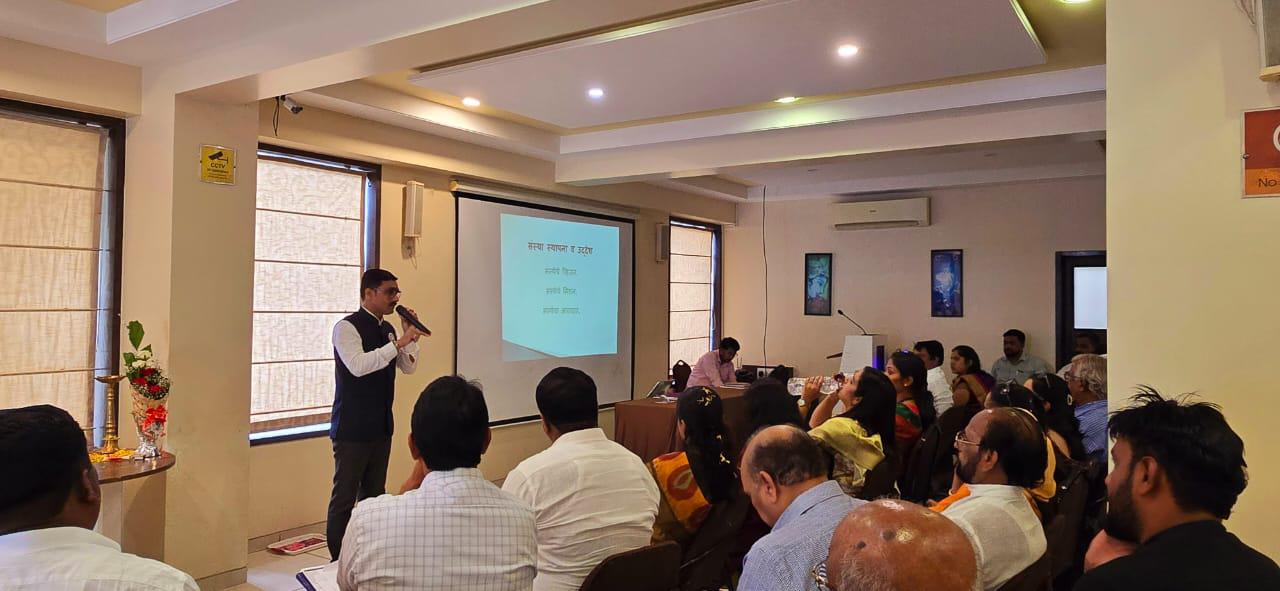

1Tax exemption on donations under Income Tax Section 80G: Yuvraj Yedure
Voluntary help, either in money or in kind, is known as charity to the needy. A way for people to give back to the society, it not only makes you happy from within, but you can also save some tax when you donate.
Today, there are various NGOs (Non-Governmental Organizations) and other non-profit organizations that work together to organize charitable activities that help them raise funds or provide non-monetary charity to the needy. Such organizations have tried their best to play a significant role in promoting various economic development and social welfare objectives initiated by the Government of India.
The outreach and local approach adopted by NGOs and other NGOs (Non-Governmental Organizations) helps in ensuring that the needy are identified and a helping hand is given to them. This is one of the major reasons why the Government of India grants tax concessions and exemptions to NGOs and charitable institutions, the most notable of which is the exemption under Section 80G of the Income Tax Act.
What is Tax Exemption?
The reduction or removal of the liability to make a mandatory payment which is otherwise imposed by the ruling power on property, person, income and so on, is known as tax exemption. Being tax-exempt status may provide exemption from other taxes, offer lower rates or tax only on a portion of certain items. Tax exemption for donations to charitable trusts and NGOs, property and income tax for veterans, cross-border situations and so on, are some examples of tax exemptions. One important thing that organizations need to keep in mind is that registration is granted under Section 12A of the Income Tax Act. However, it does not directly grant 80G deduction. This is because Section 80G tax savings through donations are only applicable to charitable trusts, NGOs (Non-Governmental Organisations) and similar organisations. It is not applicable to religious trusts or institutions.
Exemption on donations under Section 80G of the Income Tax Act
Section 80G of the Income Tax Act of 1961 is a little different, as it also provides tax exemption to charitable donors. Donations made to NGOs are considered as deductions under Section 80G while computing the total income of the donor. The recipient of a charitable donation gives the donor a donation receipt on the basis of which they get eligible deductions, if the NGO or charitable trust has been approved under Section 80G. In addition, charitable tax exemptions are also applicable if the charity is established in India and is functioning for charitable purposes in the country.
For example, when you contribute to causes and activities supported by Swarajya Kalyan Sevabhav Sanstha, you are eligible for certain tax exemptions on your donation to our NGO (Non-Governmental Organisation). This income tax exemption can be claimed only if the NGO (Non-Governmental Organisation) registered and certified with the Income Tax Department provides the 80G receipts and 80G certificates required by the government to the donors.
One important thing that you should remember here is that the tax exemption for charities, NGOs and other NGOs (Non-Governmental Organisations) under the Income Tax Act is governed by Section 12A. However, it does not allow deductions for donors or offer tax benefits on donations, for which deductions are listed under Section 80G. The deduction under Section 80G of the Income Tax Act restricts donations to religious trusts or institutions, which are not included in the income tax exemption.
More on tax exemption on donations to NGOs
Although the government allows claiming deduction on donations to charities and relief funds, tax exemption for NGO (Non-Government Organisation) donations may not be applicable in all cases. People who are eligible to pay tax are automatically eligible for tax benefit on donations under Section 80G. Here, the taxpayer can be an individual, firm, company, Hindi Undivided Family, company or anyone else. However, you must also be an Indian or a Non-Resident Indian (NRI) holding an Indian passport and you must have taxable income in India to be eligible for the protected tax benefit on donations.
Furthermore, to claim exemption under the Income Tax Act, the donor must also fulfil the following criteria:
* The donation must have been made to an approved, registered and certified NGO (Non-Government Organisation) or non-profit organisation as mentioned under Section 12A of the Income Tax Act.
* 80G Additional 10BD Receipt should be available for the donation.
* In some cases, the donor may be required to submit a copy of the 80G Certificate Download of the NGO (Non-Government Organisation) or the institution to which the donation is made.
* The Income Tax Act limits cash donations to Rs. 2000. Therefore, if you wish, if you wish to claim tax deduction on donations to NGOs (Non-Government Organisation) for an amount exceeding Rs. 2000, the donation cannot be made in cash. Another mode of payment will have to be used.
There is no tax benefit for donations to NGOs (Non-Government Organisation) even if the type of donation is made.
Eligibility to claim Income Tax Deduction under Section 80G
All taxpayers in India, or those who have taxable income in India, are eligible to claim tax savings on donations made to charitable institutions as deductions under Section 80G of the Income Tax Act, subject to the limits prescribed by the Government of India. This includes individuals, Hindu Undivided Families and companies. Non-Resident Indians, who hold an Indian passport, are also entitled to receive donations to NGOs (Non-Governmental Organisations) under 80G, if their donation is made to an eligible organisation or fund.
Only donations made to legitimate, registered charities are eligible for appropriate deductions or tax relief. An NGO cannot also be a religious trust or fund. This means that the trust or charity to which you are donating must be registered under Section 12A, after which they will be eligible to download an 80G certificate. Individuals should always check their identity documents before making a donation to a charity.
Documents required to claim Section 80G deduction
If you wish to claim Section 80G deduction, you need to submit the following documents to support the claim:
* Receipts: A duly stamped receipt issued by the charity that received your donation is mandatory for you. The receipt should clearly mention important details like the name, address and PAN of the trust, the amount donated as well as the name and PAN card of the donor.
* Form 58: This is a required document for donations that are eligible for 100% deduction.
* Registration Number of the Trust: Every eligible trust is provided a registration number by the Income Tax Department and it is important to ensure that the donor mentions this number on their donation receipt. Additionally, the registration number should be valid on the date on which the donation was made.